The biggest wine collection in the world with over 1.5 million bottles
One of the largest supplier of walnuts in the EU
Only 7% of the world is suitable for growing walnuts. The entirety of Moldova is suitable, becoming one of the largest supplier of walnuts in the EU
1st
largest winecellar by numbers of bottles
1st
country in the world with the highest density of wineyards
10th
exporter of apricots
18th
exporter of grapes
16th
exporter of wine
10th
exporter of cherries
16th
exporter of apples
Executive Summary
Agriculture in Moldova
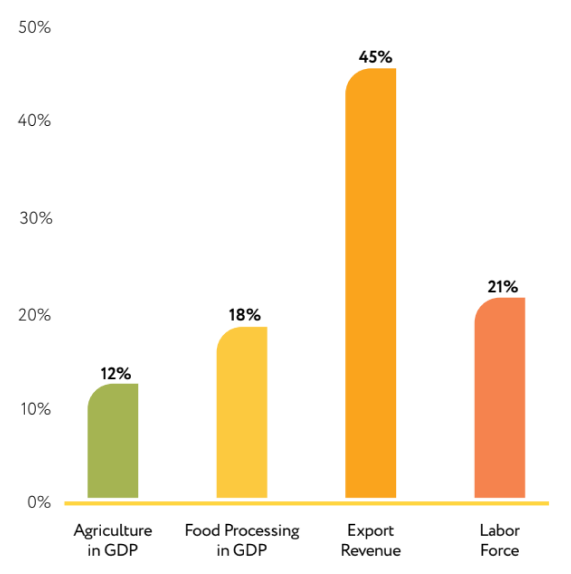
Agriculture stands as a cornerstone of Moldova's economy, bolstered by favorable climatic conditions, fertile soils, and a diverse biosphere. Representing approximately 12% of the GDP in recent years, agricultural production—alongside food processing—accounts for more than 18% of the GDP and 45% of the nation’s export revenue. Key export commodities include wines, spirits, and a variety of fresh and processed fruits and vegetables. Agriculture also remains one of the most significant employment sectors, engaging about 21% of the labor force.
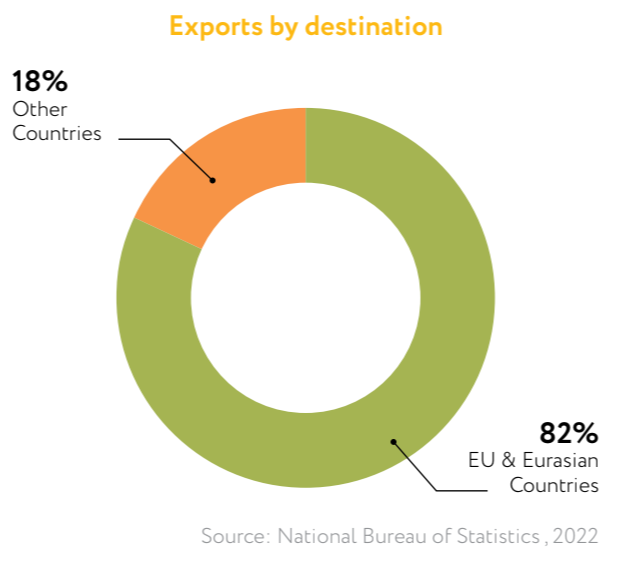
To sustain growth in agri-food exports and expand into high-value markets, diversification is crucial. Strengthening trade ties with the EU is anticipated to bolster this diversification effort. Currently, Moldova engages in agricultural trade with over 70 countries, with the EU and Eurasian Countries being predominant partners, together accounting for 82% of Moldova’s foreign trade. As of 2022, exports to the EU amounted to USD 2.5 billion, while imports were valued at USD 4.4 billion.
The nation is renowned for a broad spectrum of agricultural goods, ranging from staple crops like wheat, barley, and maize to a rich variety of fruits, vegetables, and livestock products. In the last year, the livestock sector alone has witnessed a 35% production increase.
Prominent vegetables cultivated include tomatoes, onions, and a selection of gourds and greens. The fruit sector is predominantly comprised of apples, plums, sweet and sour cherries, apricots and peaches, complemented by nuts and grapes cultivated for various uses.
41 Billion MDL
From 2020 to 2022, the agricultural production grew by 35%, reaching the value of ca. 41,000 million MDL.
2,5 Million ha
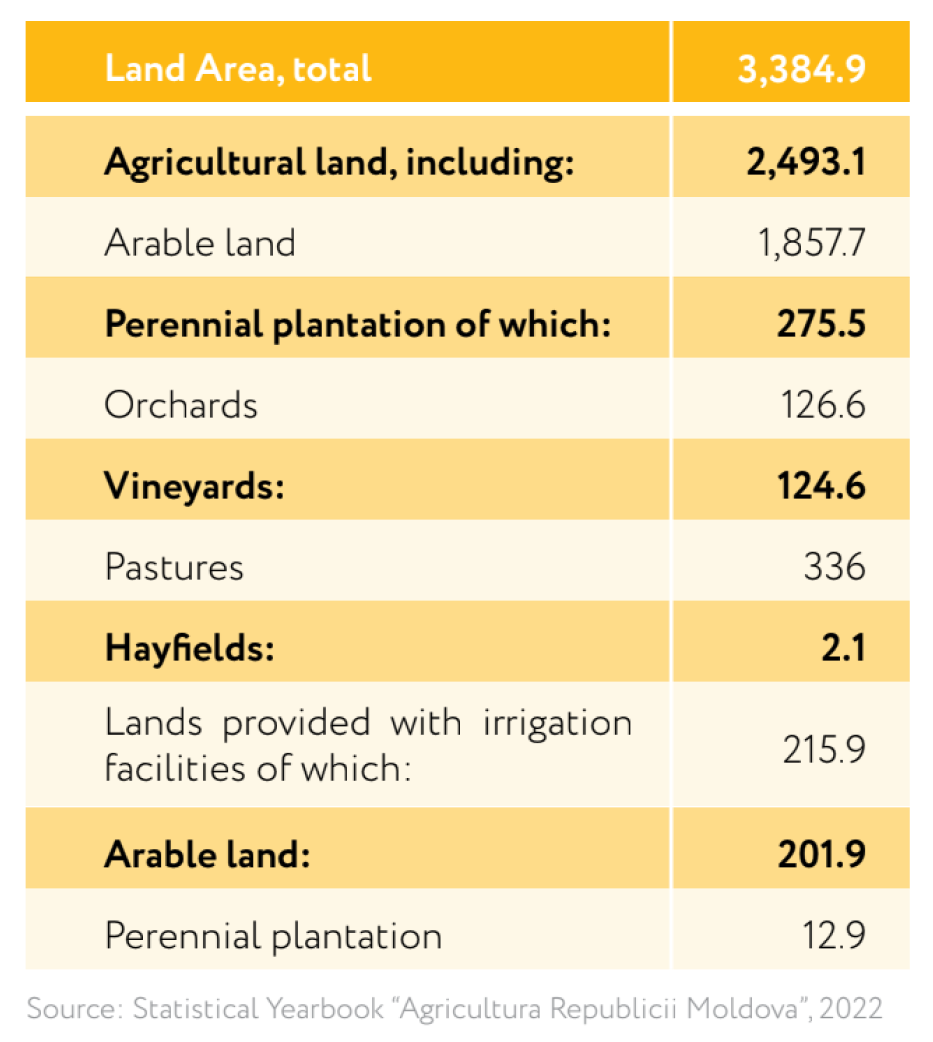
The entire agricultural lands cover 2.5 million hectares or 75% of the country’s territory. Out of which 1.85 million hectares are arable land, 0.27 million hectares are perennial plantations.
75%
Black soils amount to around 75 percent of the overall territory.
33,847 km2
Total area of the Republic of Moldova is 33,847 km2.
360,000 ha
Meadows & pastures 360,000 ha.
Executive Summary
Domestic Sector
In Moldova, agriculture is preeminent, accounting for the largest portion of land use within the nation. The vast majority of agricultural activity occurs on the fertile chernozem soils that cover 75% of the territory, enhancing the country's capacity for both annual and perennial crop production. These lands, particularly concentrated in northern districts, benefit from an amalgamation of high-quality soil resources and diverse microclimates.
The synergy between agriculture and processing industries forms a significant segment of Moldova's national economy, establishing the country as a key supplier of agricultural products to neighbouring markets. This sector is bolstered by a tradition of diligent agriculture, complemented by an increasing trend of private investments.
Agriculture plays a crucial role in Moldova’s food security, fulfilling the majority of the country's food requirements and diminishing reliance on external sources. Additionally, the sector furnishes other industries with essential raw materials.
Trade Dynamics with the EU
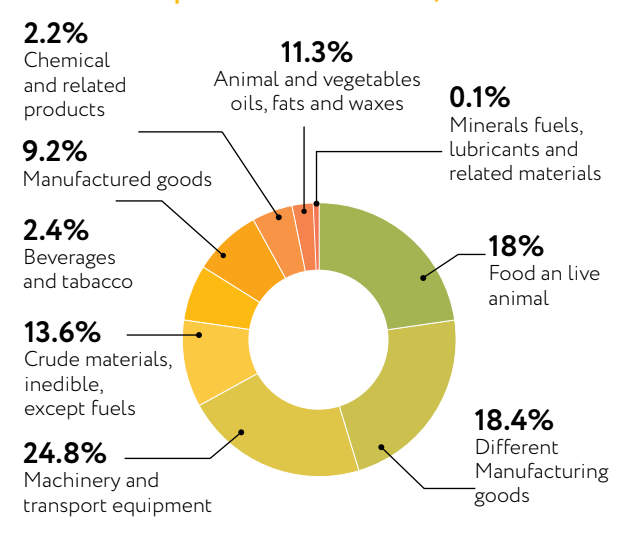
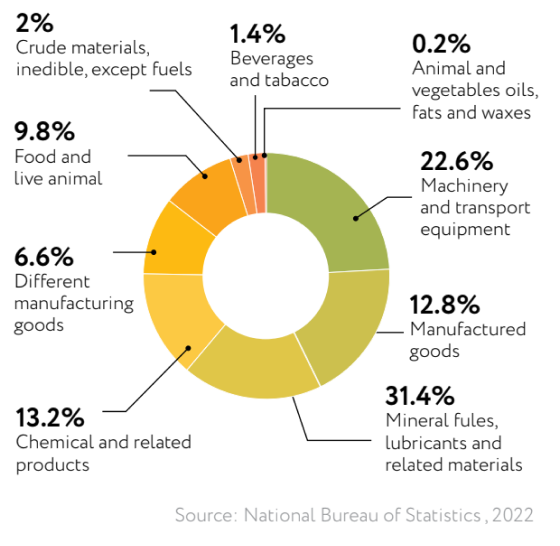
In 2022, Moldova's export profile to EU countries featured a substantial segment of animal and vegetable oils, fats, and waxes, constituting 11.3% of total exports. This was followed by significant exports in the categories of food and live animals, and machinery and transport equipment. Imports from the EU presented a diverse composition, with the majority constituted by manufactured goods and chemicals, alongside significant percentages of food and live animals, machinery, and fuels.
Exports to EU countries, 2022
Imports from EU countries, 2022
Strategic Benefits
of Agricultural Development
Optimal Geographic and Climatic Conditions
Moldova's moderate continental climate and long growing seasons favor the cultivation of early vegetable varieties, providing a competitive edge. The nation's rich humus soil profiles and adequate water resources underpin this advantage.
Experienced Agricultural Workforce
Leveraging a history of agrarian skill and knowledge, particularly in high-value crops such as fruits, vegetables, tobacco, and viticulture, Moldova's farming population contributes to a robust agricultural output.
Land Utilization in Moldova
Soil is a critical asset to Moldova’s agronomy, with chernozem soils making up a substantial part of the country's 10 diverse soil types. Despite their fertility, these soils are receptive to environmental influences, posing certain risks such as climatic extremes and anthropogenic impacts.
Fertile Soil and Labor Force
These two factors converge to yield efficient production sectors focused on high-value export goods, characterized by high profitability and productivity levels.
Proximity to Key Markets
Moldova's location offers convenient access to EU, CIS, and broader international markets, including Egypt and the UAE, facilitating expansive trade opportunities.
Do you have questions?
Invest Moldova is here to provide assistance and information to help you invest efficiently!
Overview of Agricultural Land Use in Moldova (2022)
Composition
of Agricultural Sector
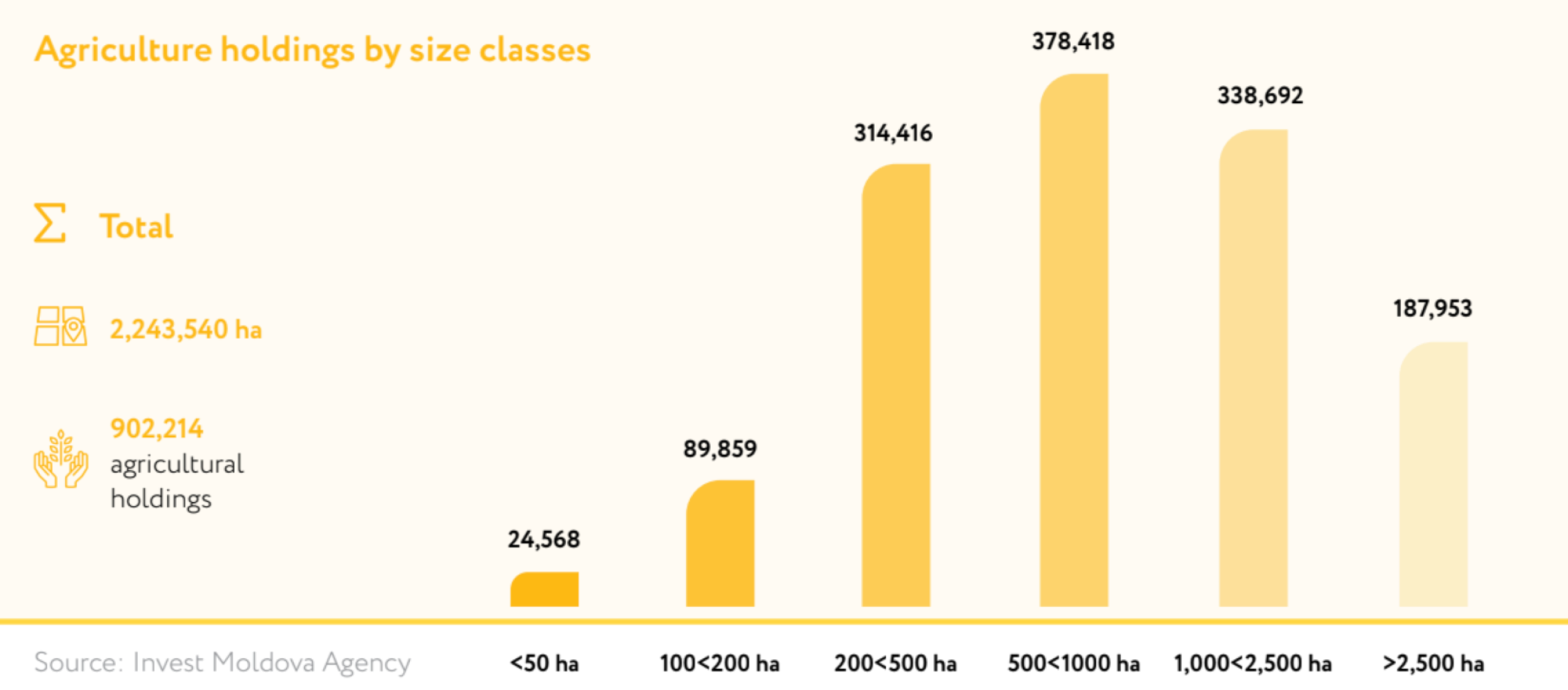
The Moldovan agricultural landscape is bifurcated into two significant sub-sectors: large-scale corporate enterprises and individual operators, which include family-owned farms and smallholdings.
The latter often engages in subsistence farming and contributes to the market with specialty produce such as fruits, nuts, and vegetables. On the other end, corporate agricultural entities focus on bulk commodities like cereals and sugar beets, utilizing mechanized farming to optimize output and cost- efficiency.
Distribution of Agricultural Holdings table
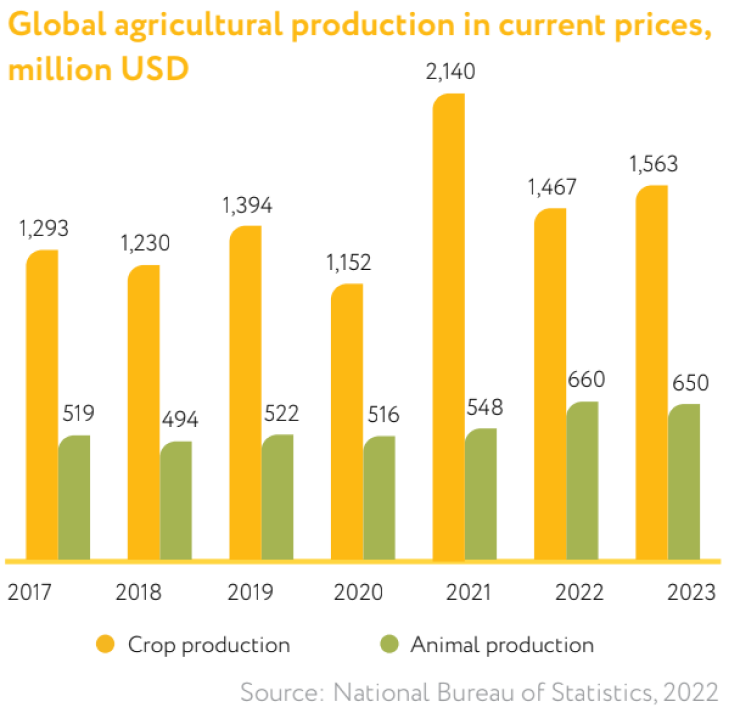
Moldova's diverse agronomic output encompasses a range of commodities from horticulture to grains and livestock, with a notable output value of 2,100 million USD in 2022. The preponderance of plant cultivation, particularly cereals and industrial crops, underscores the sector's strategy of ensuring high-yield production.
There's a marked shift from fodder crops to more profitable alternatives, a transition that supports both economic viability and land conservation. Strategies for sustainable diversification include the introduction of varied crop varieties, fostering a balanced crop rotation that mitigates soil depletion.
Major Agricultural Products
The Republic of Moldova offers a wide range of agricultural product groups, including fruits, vegetables, grains, and livestock. In 2022 agriculture output reached 2,100 million USD.
Plant growing has a dominant position in the structure of agricultural production; its share in the total agricultural production is about two-thirds. Cereals and industrial crops occupy about 90% of the area. Production of fodder crops on arable lands has decreased, which leads to the disruption of crop rotation patterns, deterioration of livestock forage, increasing the pressure on the lands to a level that leads to their degradation. Production increases can be realized in future by further diversification of crop varieties, which as a result will also allow for optimized crop rotation patterns.
Read the whole research about Agriculture Sector in Moldova
Discover more pages of comprehensive analysis about the Agriculture sector in Moldova.
We use cookies to improve your browsing experience, analyze site traffic, and personalize content. By clicking "Accept All", you agree to the use of cookies.
Cookie Settings
We use different types of cookies to optimize your experience on our website. Click on the categories below to learn more and customize your preferences.
These cookies are essential for the website to function properly. They enable basic features like page navigation and access to secure areas. The website cannot function properly without these cookies.
These cookies help us understand how visitors interact with our website by collecting and reporting information anonymously. This helps us improve our website and user experience.
These cookies are used to deliver personalized advertisements that are relevant to you and your interests. They also help measure the effectiveness of advertising campaigns.