Government commitment to energy transition ensures legal stability for renewables.
Feed-in Tariffs
Scheme for power plants with a capacity not exceeding the capacity limit set by the Government, but not less than 10 kW
EU Market Access
The maximum electricity export capacity from Ukraine and Moldova to EU countries has been increased to 900 MW.
Bankable PPAs
15-year state-backed Power Purchase Agreements ensure predictable returns.
165 MW
Moldova launches 165 MW in solar and wind auctions – early investors gain access to guaranteed, state-backed energy projects.
Moldova's Energy Demand & Dependency
The dependence of Moldova on the energy imports:
Roughly 80 % on electricity.
100 % on fuels for transport.
100 % on natural gas.
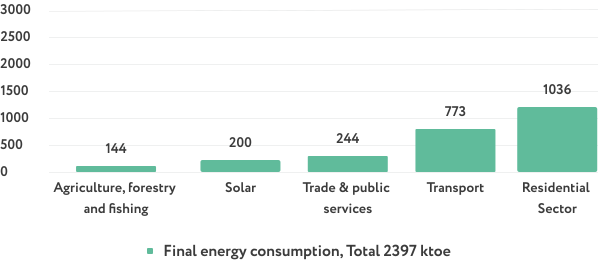
Moldova’s national energy demand, 2023
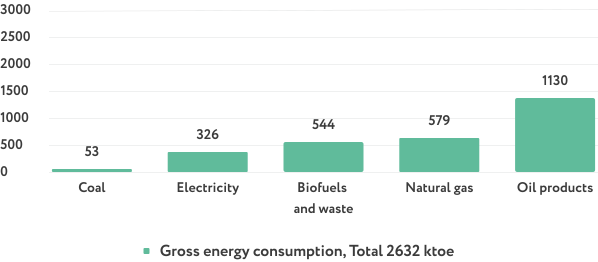
Moldova’s national energy demand, 2023
Promotion of
Renewable Energy
By the end of 2025, the Ministry of Energy plans to launch a new round of auctions in the period 2025-2026. This round will include a battery energy storage system (BESS) component to increase grid stability and reduce imbalances.
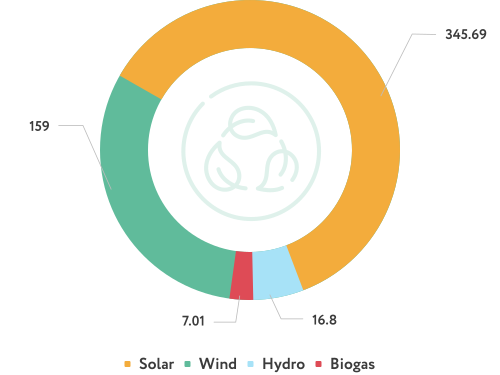
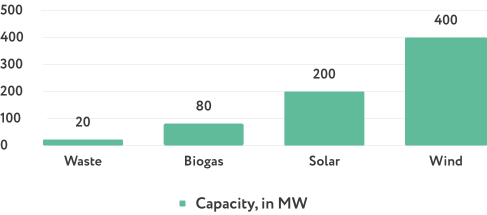
Installed generation capacity at the end of 2024, (MW)
Installed generation capacity at the end of 2024, (MW)
By the end of 2025, the Ministry of Energy plans to launch a new round of auctions in the period 2025-2026. This round will include a battery energy storage system (BESS) component to increase grid stability and reduce imbalances.
RES
integration and flexibility
As renewable energy capacity increases, the need to develop balancing capacities of the system — including balancing units and BESS — becomes essential, while harnessing biogas can provide both short - and long-term flexibility to contribute to balancing the power system.
Moldova requires 246 MW of balancing capacity but can currently cover only 80 MW with existing infrastructure. To close the gap and support renewable energy integration, Moldelectrica will launch tenders for balancing services, including 72 MW aFRR and 174 MW mFRR. Expanding balancing units, BESS, and using biogas will be key to ensuring system flexibility.
New capacity by end of the 2030
1st Tender for Solar and Wind Power,
Deadline have been - March 2025
Capacities put out for Tender,
Wind Power
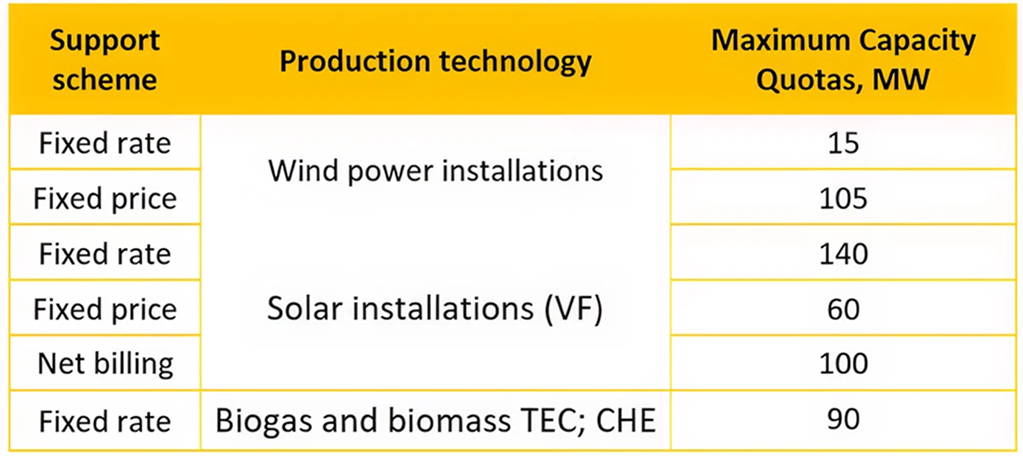
Max.Capacity: 105 MW
Capacity: 4 MW
Ceiling Prices: 77.88 EUR/MWh, 1.5 MDL/kWh
Capacities put out for Tender,
Solar Power
Max.Capacity: 60 MW
Capacity: 1 MW
Ceiling Prices: 86.7 EUR/MWh, 1.67 MDL/kWh
Impact of the RES Tender on the national market
Attract private investments ~190M EUR.
Create jobs ~400 full-time equivalent jobs during the construction phase.
Create jobs ~40 full-time equivalent jobs for operation and maintenance.
Reduce CO2 emissions, ~1,368,000 m.t.
Increase the RES-E consumption to 18% after first year of operation.
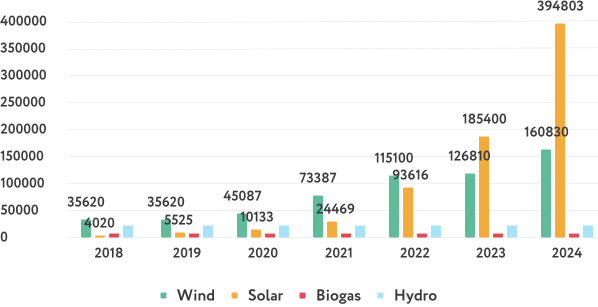
Capacity limits by capacity category in the field of renewable energy
Liberalisation of
Energy Markets
Launch of the Day Ahead Market (DAM)
Launch of the Intraday Market (IM)
Coupling the national DAM and IM with similar markets in Member States
Increasing the liquidity of markets to EU comparable levels
Gas exchange is launched and operational BRM Romania
Designated electricity market operator OPEM as a subsidiary of OPCOM in Romania
Power system development project
(to have liberalisation of the energy market possible)
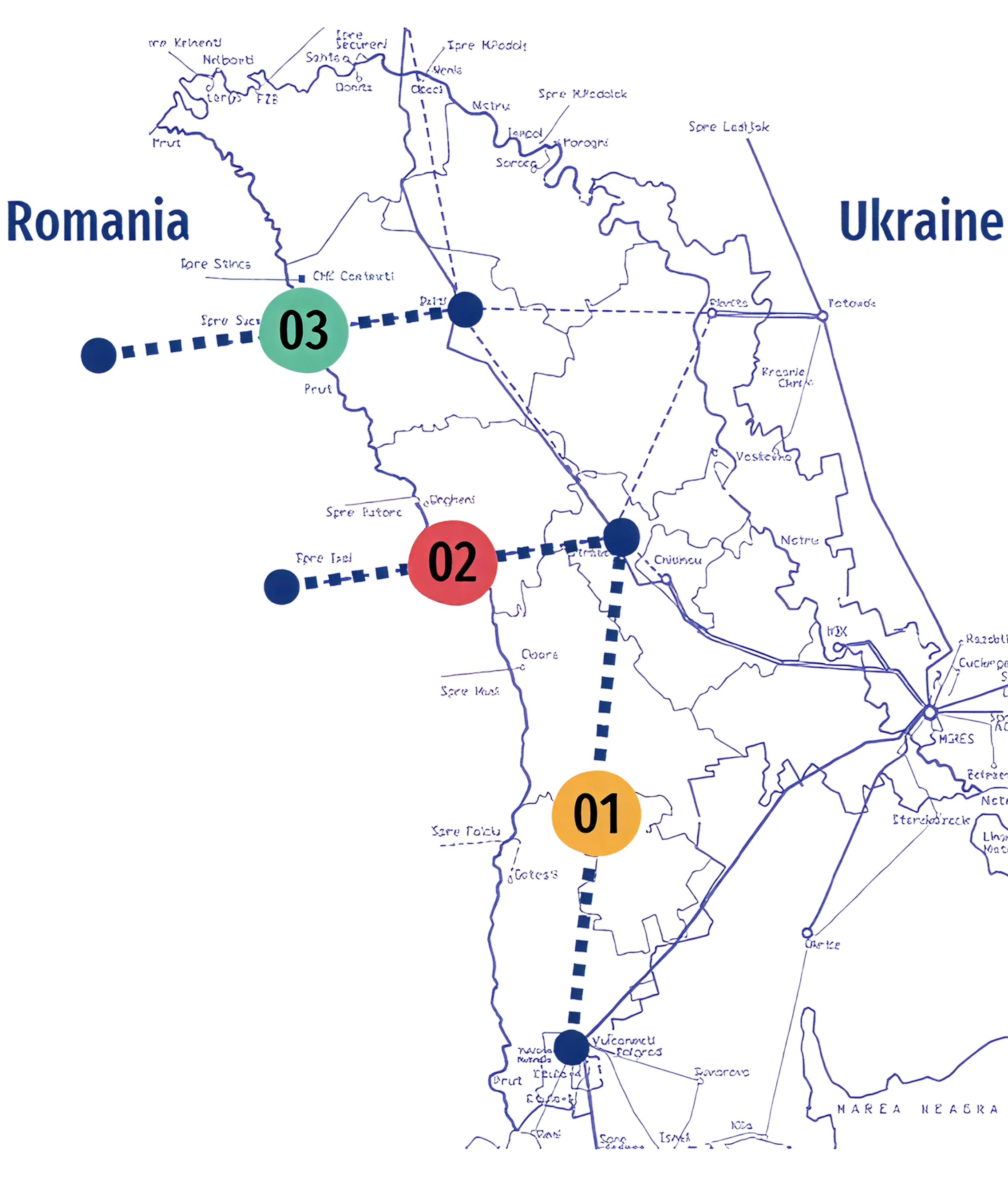
Construction of a single - circuit 400 kV high voltage
Overhead power line in the direction Vulcanesti- Chisinau, with a length of about 158 km. Modernisation and extension of two electrical substations.
Implementation cost: 61 million EUR (IDA) Deadline: Q4 2025
Construction of the 400 kV overhead power line
Power interconnection line between Straseni (MD) - Gutinas (RO) with extension of Straseni station.
Under development: Feasibly Study and Environment Impact Assessment. Implementation cost: approx. $110 mil. (no funding)
Construction of the 400 kV overhead power line
Power line in the direction of Balti (MD) - Suceava (RO), with a length of 40km in Moldova. Including reconstruction of Balti 400kV power station.
Implementation cost: 37 million EUR (EBRD, EIB, EU) + 40 million EUR for Electric Stations of SE Moldelectrica. Deadline: Q4 2027
Sandbox Law
What is a regulatory sandbox?
• A regulatory framework that allows you to build (almost) anything you want.
• A space that encourages creativity and exploration, allowing yourself to fail in some attempts.
• A safe environment for testing new ideas, but well-defined and bounded.
• An opportunity to take advantage of specific regulatory exemptions for up to 7 years, though not all restrictions are lifted.
Benefits of a sandbox
• Encourages innovation
• Regulatory flexibility
• Risk mitigation
• Consumer protection
• Accelerated energy transition
• Promotes sustainability
Discover a unique opportunity to innovate and transform Moldova’s energy sector!
Do you have questions? Invest Moldova is here to provide assistance and information to help you invest efficiently!
Utilizăm cookie-uri pentru a îmbunătăți experiența dvs. de navigare, pentru a analiza traficul pe site și pentru a personaliza conținutul. Făcând clic pe „Acceptă toate”, sunteți de acord cu utilizarea cookie-urilor.
Setări cookie
Utilizăm diferite tipuri de cookie-uri pentru a optimiza experiența dvs. pe site-ul nostru web. Faceți clic pe categoriile de mai jos pentru a afla mai multe și a vă personaliza preferințele.
Aceste cookie-uri sunt esențiale pentru funcționarea corectă a site-ului web. Ele permit funcții de bază, cum ar fi navigarea pe pagină și accesul la zone securizate. Site-ul web nu poate funcționa corect fără aceste cookie-uri.
Aceste cookie-uri ne ajută să înțelegem modul în care vizitatorii interacționează cu site-ul nostru web, colectând și raportând informații în mod anonim. Acest lucru ne ajută să îmbunătățim site-ul nostru web și experiența utilizatorilor.
Aceste cookie-uri sunt utilizate pentru a afișa reclame personalizate, relevante pentru dvs. și interesele dvs. De asemenea, ele ajută la măsurarea eficienței campaniilor publicitare.